
Cash vs. Cards in Tattoo Shops
The Real Numbers, Real Risks, and Real Revenue You’re Missing
For decades, tattoo culture has embraced cash as the simplest way to get paid. It feels fast, familiar, and easy. But when you look closer, cash doesn’t just simplify the transaction — it quietly restricts revenue, limits artistic opportunities, and creates operational blind spots that hold tattoo shops back. The truth is this: card payments don’t just modernize your business. They unlock bigger sessions, better clients, more retail sales, and smoother operations from the front desk to the end-of-day closeout.
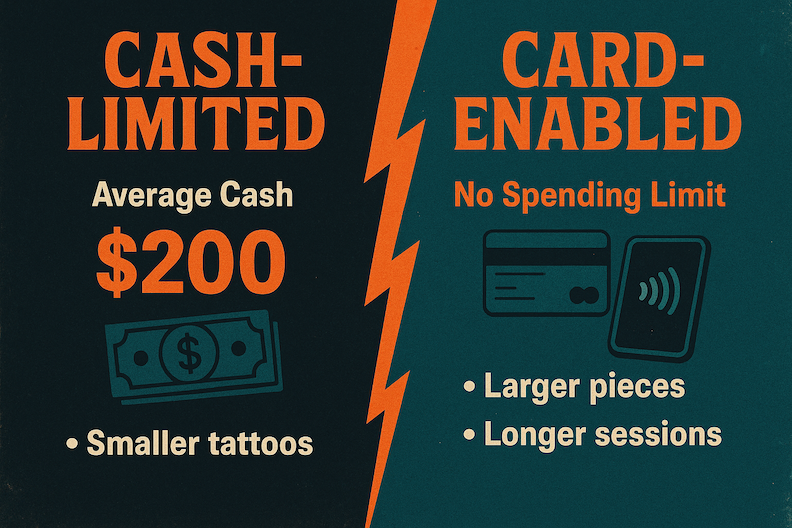
Many customers walk into a tattoo shop with a firm budget based solely on the cash in their pockets. If a client brings $400, that becomes their ceiling — even if they walked in planning to spend more or the artwork deserves a higher price. Artists regularly see moments where a client wants the $500 version of a piece but settles for the $400 version simply because they aren’t carrying enough cash. Card acceptance removes that ceiling entirely. When clients can tap their phone or swipe a card, they gain the freedom to commit to larger pieces, add shading, purchase aftercare products, or book multi-hour sessions without worrying about ATM limits or cash availability.
Cash-heavy shops unintentionally encourage smaller thinking — both from clients and from their overall brand perception. Walk-ins tend to stay small when customers are limited to the cash they’re carrying. But card-friendly studios attract clients ready to invest in larger, more meaningful work. Most people don’t carry $1,000 in cash, but nearly everyone has a debit or credit card capable of supporting a large tattoo session. As a result, shops that take cards consistently see higher average ticket sizes and more multi-session commitments.
Operationally, cash introduces chaos that most shop owners simply accept as “the way it’s always been.” Missing money, counting errors, untracked tips, staff disputes, daily bank runs, and safety concerns all stem from relying heavily on physical cash. Card payments eliminate these issues. Every transaction is tracked digitally. Tips are automatically recorded. Owners gain transparency, accountability, and clean end-of-day reporting. What once required manual effort becomes effortless.
Modern clients also expect a modern payment experience. Tattoos are high-trust, high-commitment services. Customers feel more confident booking when they can pay deposits online, use tap-to-pay, or checkout with Apple Pay or Google Pay. Payment technology signals professionalism — and clients reward professionalism with loyalty. Shops that upgrade their payment experience naturally attract stronger clients and see fewer cancellations, higher reviews, and smoother booking flows.
Matt “Skinny” Bagwell of Made To Last Tattoo captures this shift perfectly:
“Customers don’t think about cash anymore. They think about convenience. When we opened up card payments, everything changed — better tips, better workflow, bigger tickets.”
The biggest financial threat of all is the one owners rarely calculate: the opportunity cost of staying cash-focused. Every time a client can’t afford a bigger tattoo, skips aftercare products, or chooses not to extend a session because they don’t have more cash, the shop loses revenue that could have been captured effortlessly with card payments. Revify’s dual pricing model, designed specifically for tattoo businesses, solves the last remaining concern — processing costs. With dual pricing, clients who pay by card cover the associated fees, while cash payers continue paying cash. The shop keeps every dollar without sacrificing modern payment convenience.
In the end, cash may feel comfortable, but it creates limitations that most artists and owners no longer need to accept. Card payments empower clients, increase average ticket size, streamline operations, and elevate the shop’s overall reputation. The tattoo studios embracing modern payment systems aren’t just keeping up — they’re pulling ahead. Those who resist will eventually lose clients to the shops that offer a smoother, more flexible experience.
If you want your shop to grow, thrive, and compete, card acceptance isn’t optional anymore — it’s a strategic advantage.
See what your shop would keep
Revify is payment processing built for tattoo studios: a cash price and a card price, no processing fees, a free terminal, and Monthly Cash-back of 0.75% of card sales.
Run your numbers in the savings calculator or see how it works for tattoo shops and artists.

