
The Tattoo Shop Front Desk Playbook: Scripts for Quotes, Consults, and Walk-Ins
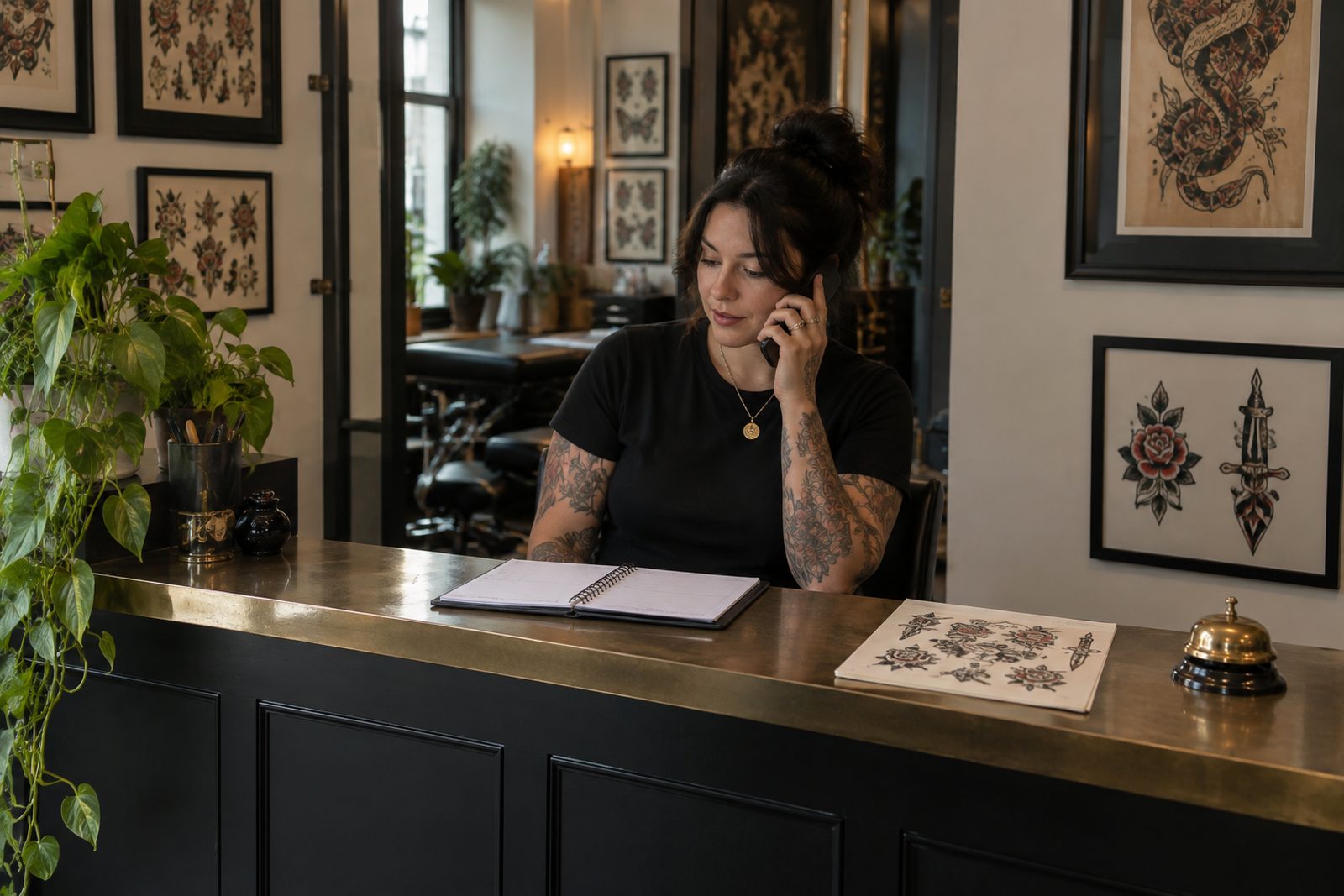
The Tattoo Shop Front Desk Playbook: Scripts for Quotes, Consults, and Walk-Ins
The short answer: the front desk turns interest into booked, deposited sessions. Give every phone quote a range and a next step, end every consult with a deposit ask, triage walk-ins in under a minute, answer "why so expensive?" with what the price includes, and text back every missed call fast. Below are word-for-word scripts you can adapt for your shop, whether the desk is a full-time receptionist or the artist between sessions.
Use the scripts as a starting point, not a cage. Swap in your own prices, policies and voice so they sound like your shop.
The phone quote script
Most callers ask one question first: "How much for a tattoo?" Nobody can price a piece over the phone, but "it depends" ends the call. Give a range, explain what moves it, and point to a next step.
Phone quote script:
- "Thanks for calling [Shop]. What are you thinking of getting?"
- "Nice. Where on the body, and roughly how big? Palm-sized, hand-sized, bigger?"
- "Pieces like that usually run between $[low] and $[high] here. The final price depends on detail, color and how long it takes."
- "The best next step is a quick consult with [Artist], who does a lot of this style. Can I get your name and number and send you the booking link?"
Two rules make this work. First, always quote your shop minimum when the piece is small. Second, never give an exact price for custom work over the phone. If your team is still debating hourly vs. flat rates, settle that first with our guide to pricing tattoos hourly or flat rate, so every quote at the desk matches what the artist charges.
Consults that end in a deposit
A consult that ends with "let me know" usually doesn't come back. The desk's job is to close the loop before the client leaves the room or hangs up the video call.
Consult close script:
- "So you're happy with the size, placement and style?"
- "[Artist] estimates [time or price range] for this piece."
- "To hold a date, we take a $[amount] deposit. It comes off your final price and covers the drawing time."
- "[Artist] has [date] or [date] open. Which works better?"
Offer two dates rather than asking "when are you free?" It's easier to pick between two options than to plan from a blank calendar. Take the deposit right then by card or payment link, and confirm your reschedule and refund policy in writing. If you need policy wording, our tattoo shop policies guide has templates.
Walk-in triage
Walk-ins are good money on slow days and a headache on busy ones. Triage in under a minute so nobody stands around waiting.
Walk-in questions, in order:
- What and where? "What are you thinking, and where on the body?"
- Size check: If it's small flash or lettering that fits today's open time, quote it and check ID.
- Who's free: Match the piece to an artist who's free and does that style.
- Not today? "That's a bigger piece, so let's book a consult with [Artist]. I can get you on the calendar right now."
Keep a flash sheet and posted minimum at the counter. It answers half the questions before they're asked and gives walk-ins something to say yes to. Every walk-in who leaves without a booking should leave with your booking link at least.
Handling "why so expensive?"
Don't get defensive and don't drop the price. Explain what the price buys, then offer an option that fits the budget.
Price objection script:
- "Totally fair question. That price covers [Artist]'s time drawing a custom design, single-use needles and supplies, sterilization, and a piece you'll wear for life."
- "If you'd like to come in lower, we can make it smaller, simplify the detail, or look at flash, which is priced lower because it's already drawn."
- "Want me to show you what [Artist] could do around $[budget]?"
The client keeps the budget and the shop keeps its rates. Discounting the same piece trains clients to haggle and undercuts your artists.
Missed calls: text back in 60 seconds
When the artist is mid-session and the desk is busy, calls go to voicemail, and plenty of callers won't leave a message. They just call the next shop on the list. A fast text keeps the lead.
Missed-call text:
- "Hi, this is [Shop]. Sorry we missed your call, we're with a client. What can we help with? You can also book a consult here: [link]"
Keep it short, friendly and useful, and have someone follow up on every reply the same day. Doing this by hand is hard when everyone has gloves on. InkedIn texts back every missed call automatically → and the reply lands in the same inbox as your Instagram DMs, Facebook messages and email.
Make the scripts stick
- Print them and keep a copy at the counter and on the shop phone.
- Role-play once a month with whoever covers the desk, including artists.
- Track three numbers: calls and DMs in, consults booked, deposits taken. If consults are high and deposits low, fix the consult close.
Tools help too. Online booking with deposits charged at booking, automatic reminders, and aftercare and review requests after every session take a lot of repeat work off the desk. Our guide to cutting no-shows covers the reminder side.
The bottom line
A good front desk doesn't sound salesy. It sounds prepared. Give callers a range and a next step, close consults with a deposit and two dates, triage walk-ins fast, defend your prices kindly, and never let a missed call go cold. Want to see how InkedIn handles bookings, deposits and missed calls for your shop?

