
Tattoo Shop Policies: Aftercare, Touch-Ups, Refunds, and Chargebacks
Tattoo Shop Policies: Aftercare, Touch-Ups, Refunds, and Chargebacks
The short answer: put your touch-up window, aftercare rules, refund policy and deposit terms in writing, have every client sign them before the needle touches skin, and keep the signed copy with their record. A clear written policy prevents most arguments, and the signed copy is what wins a chargeback if one ever comes.
Here's what most shops include, the wording choices that matter, and where to post the policy so nobody can say they didn't see it. This is general information, not legal advice. Local rules vary.
The free touch-up window
Most shops offer one free touch-up for a set period after the session, commonly 30 to 90 days. Because a tattoo needs to heal before anyone can judge it, many shops ask clients to wait at least four weeks before booking. Spell out:
- How long the window is, counted from the session date.
- What's covered: missed spots, light patches and lines that healed unevenly. Design changes and additions aren't touch-ups.
- What isn't: hands, feet, fingers and other high-wear spots are often excluded or charged, because they fade fast no matter who did the work.
- How to book it: through the same booking link, with the original artist where possible.
When aftercare voids the touch-up
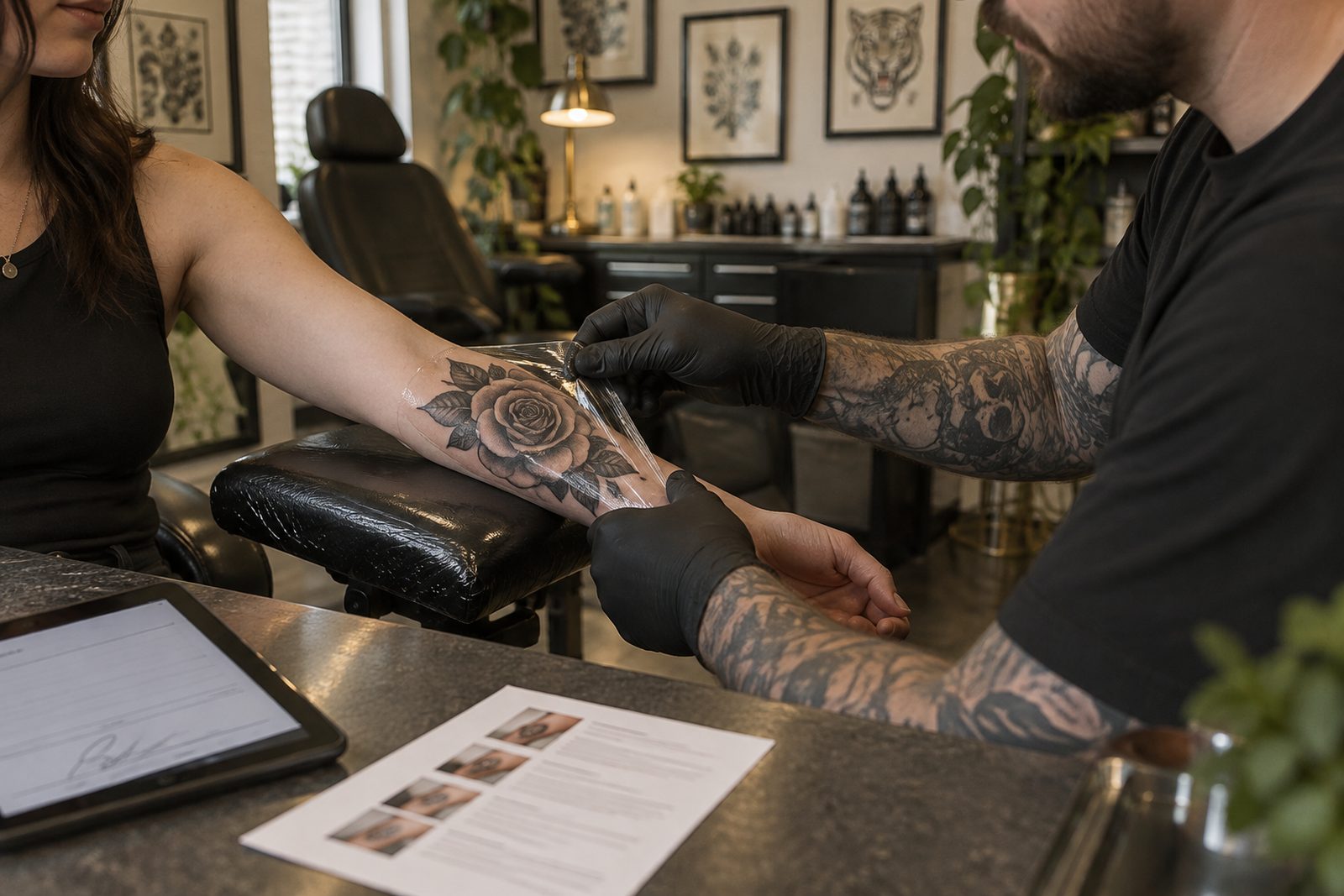
Healing is the client's job once they leave. Most policies say the free touch-up doesn't apply if the client clearly didn't follow aftercare: sun exposure or tanning, swimming or soaking during healing, or picking at scabs. Keep it fair. Say this up front, send the aftercare instructions in writing the same day, and make the exception about obvious neglect, not every faded line.
Refunds vs. redos
Once a tattoo is done, it can't be returned. That's why most shops state that completed work is non-refundable and offer a fix (a touch-up or a correction session) instead. Separate the money into three buckets so everyone knows the rules:
| Payment | Common policy |
|---|---|
| Deposit | Non-refundable; applied to the final session; transferable once with enough notice |
| Session payment | Non-refundable once work begins |
| Unhappy with the result | Talk to the artist first; fix offered within the touch-up window |
| Shop cancels | Full deposit refund or reschedule, client's choice |
For deposit amounts, notice periods and no-show rules, see our guide to tattoo deposit policies.
Chargebacks: signed policies and records win them
A chargeback happens when a client disputes a card payment with their bank instead of with you. In tattooing, it usually means someone regrets the piece, wants a deposit back after a no-show, or doesn't recognize the charge on their statement. The bank pulls the money back while the dispute is reviewed, and you have a limited window to respond, so answer quickly.
What wins is evidence that the client agreed to the terms and received the service:
- The signed consent form and policy acknowledgment, dated, with the client's name and ID
- The booking record showing the deposit terms they accepted
- Photos of the finished tattoo taken at the end of the session
- Messages with the client: design approvals, reschedule requests, aftercare sent
- The receipt showing the tip they added and their signature on the terminal
Paper forms in a filing cabinet are hard to find months later. InkedIn stores signed consent and policy acknowledgment with every client, next to their booking, deposit and messages, so the whole file is ready in a minute. Try InkedIn free for 14 days →
Where to post your policy
- On the booking page, with a checkbox the client ticks before paying the deposit.
- In the consent form they sign on the day. Digital tattoo consent forms make it a required field instead of a clipboard someone skips.
- On the wall at the counter, in plain language and big type.
- In the aftercare message sent after the session, with the touch-up window dates filled in.
The bottom line
Write the policy once, keep it short, and make every client sign it. A clear touch-up window, a fair aftercare clause, non-refundable deposits and completed work, and a signed record of all of it will settle nearly every dispute before it becomes a chargeback.

