
Tattoo Aftercare Instructions: A Template to Send Every Client
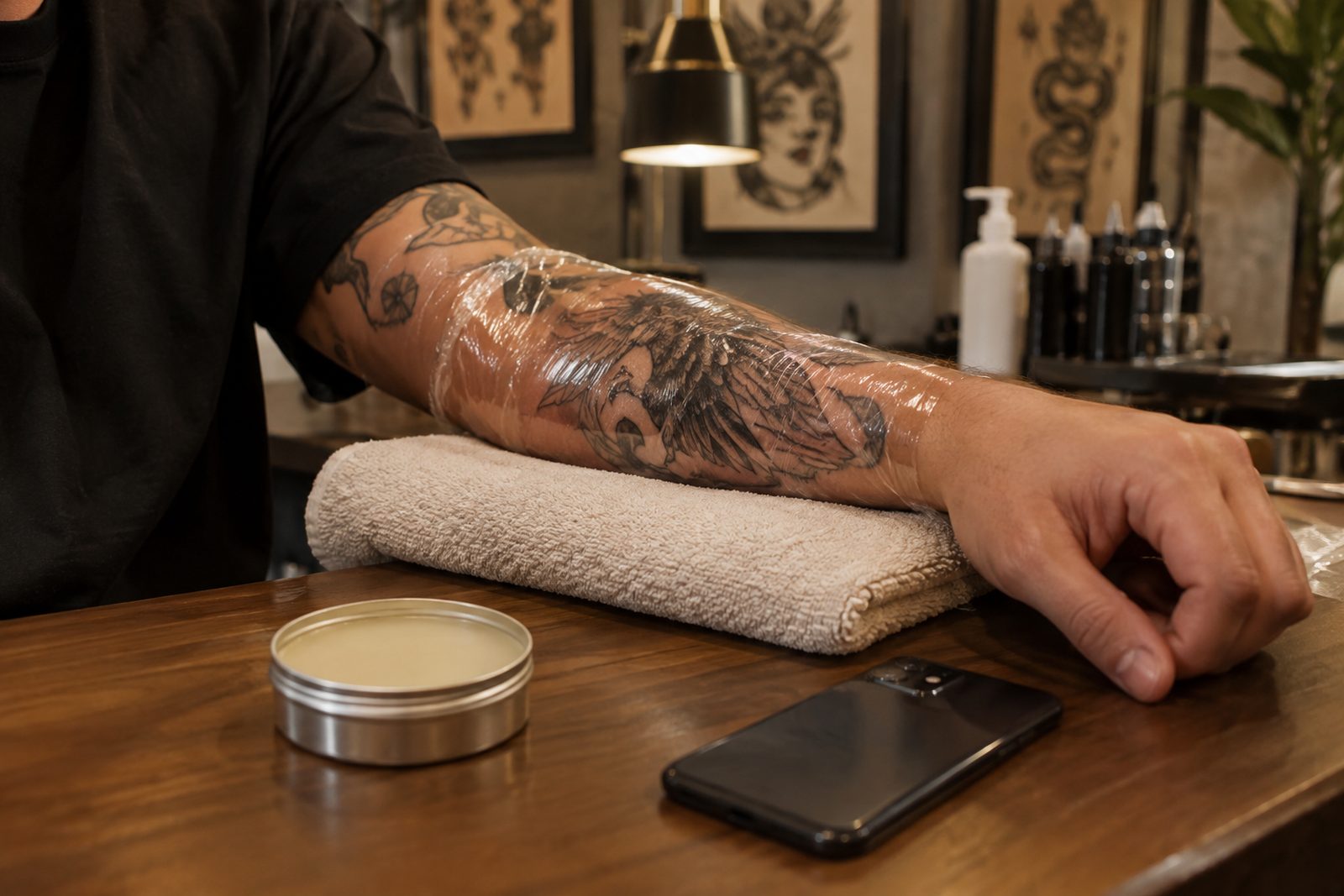
Tattoo Aftercare Instructions: A Template to Send Every Client
The short answer: keep the first bandage on as your artist says, then wash gently twice a day with fragrance-free soap, pat dry, use a thin layer of unscented moisturizer, and keep the tattoo out of the sun and out of pools, tubs and the ocean until it's fully healed. Expect peeling and itching in weeks one and two, and a dull, settling look in weeks three and four.
Below is a day-by-day template your shop can copy, adjust to your own process, and send to every client after every session. This is general information, not medical advice. Clients should follow their artist's instructions and see a doctor for any sign of infection or allergic reaction.
Days 1–3: the fresh wound
A new tattoo is an open wound. For the first few days it's normal for the skin to be red, a little swollen and sore, and for clear fluid, plasma and a bit of ink to ooze from it. What to send:
- Leave the bandage on for the time your artist gave you. A standard wrap usually comes off after a few hours. A clear adhesive film (often called "second skin") can stay on longer, often a day or more, if it isn't leaking.
- Wash your hands first, then remove the bandage slowly. Soaking it in warm water helps it come off without pulling.
- Wash the tattoo gently with warm (not hot) water and a mild, fragrance-free soap. Use your clean hand, not a cloth or sponge.
- Pat dry with a clean paper towel. Don't rub.
- Moisturize lightly with the product your artist recommends, usually a thin layer of unscented lotion or aftercare balm. Too much can trap moisture.
- Repeat twice a day. Sleep on clean sheets and wear loose, clean clothing over the area.
Week 1–2: peeling and itching
This is the stage that worries first-timers most, and it's the stage where clients do the most damage. Around the end of the first week the skin starts to flake like a sunburn and light scabs may form. Then the itching starts.
- Don't pick, peel or scratch. Let flakes and scabs fall off on their own. Pulling them early can pull ink with them.
- Keep washing and moisturizing twice a day. Moisturizer is the best fix for itching.
- A light tap or slap on the area can take the edge off an itch without breaking the skin.
- No soaking: skip baths, hot tubs, pools, lakes and the ocean. Short showers are fine.
- No sun and no tanning beds. Cover the tattoo with loose clothing outdoors. Hold off on sunscreen until the skin has closed and stopped peeling.
- Go easy at the gym if the tattoo sits where clothing rubs or skin stretches, and wipe down equipment before use.
Weeks 3–4: settling in
By now the peeling has mostly stopped. The tattoo may look dull, cloudy or slightly shiny for a while. That's a thin new layer of skin over the ink, and the colors usually brighten as it settles.
- Keep moisturizing once a day if the skin feels dry.
- Start sunscreen once the skin is fully closed. A broad-spectrum SPF 30 or higher keeps lines sharp and colors from fading for years.
- Swimming can usually resume once there's no scabbing, peeling or shiny skin left. Large pieces take longer than small ones.
- Book your touch-up if you see light patches after about four weeks. Most shops want the tattoo fully healed before any touch-up. Your shop's touch-up window and rules are in its policy; see our guide to tattoo shop policies on aftercare, touch-ups and refunds.
Deeper layers of skin keep healing for weeks after the surface looks done, so remind clients to treat the area gently for the first couple of months.
When to call the shop (and when to see a doctor)
Give clients a clear line between normal healing and a problem, so they call you early instead of posting about it later.
| Normal healing | Call the shop | See a doctor right away |
|---|---|---|
| Redness and swelling that fade over the first few days | Heavy scabbing or a patch that looks like it's lost ink | Redness that gets darker or spreads instead of fading |
| Clear fluid and a little ink oozing early on | Questions about products, swimming or the gym | Pain that gets worse instead of better |
| Flaking, light scabs and itching in weeks 1–2 | Booking a touch-up after it heals | Fever, chills, pus, open sores or red streaks |
| A dull or cloudy look in weeks 3–4 | Anything that just doesn't look right | An itchy, raised rash in one ink color, which can signal an allergic reaction |
The right-hand column follows the warning signs listed by the American Academy of Dermatology and Cleveland Clinic. Put your shop phone number and hours right under it.
The copy-and-paste template
Adjust the products and times to your own process, then send it the same day as the session:
Thanks for sitting with us today! Here's how to heal your new tattoo:
- Keep the bandage on for [X hours / until day X]. Wash your hands, then remove it slowly in warm water.
- Wash gently twice a day with warm water and fragrance-free soap. Pat dry with a paper towel.
- Apply a thin layer of [product] after each wash.
- Don't pick, peel or scratch. Peeling and itching in week 1–2 is normal.
- No pools, hot tubs, baths, ocean, sun or tanning beds until fully healed (about 2–4 weeks).
- Once healed, use SPF 30+ to keep it bright.
- Spreading redness, worsening pain, fever, or pus? See a doctor right away, then let us know.
Questions? Call or text [shop phone]. Free touch-up window: [dates].
Typing this out after every session is the part that gets skipped on a busy Saturday. InkedIn sends these aftercare instructions automatically after every session. Try InkedIn free for 14 days →
Printed sheet vs. automatic text: which clients actually read
Most shops hand over a printed aftercare card at checkout. It's a good backup, but it often gets left in a car or tossed with the receipt, and it's nowhere to be found on day six when the itching starts. A text or email has a few advantages:
- It's on the phone clients already carry, so they can find it when they need it.
- It can be timed: instructions the day of the session, then a check-in when peeling usually starts.
- It's a record. If a client later says they were never told about sun or swimming, you have the date it was sent.
- It opens the door for questions in the same thread, before a small worry becomes a bad review.
The best approach is both: a short printed card for the ride home and an automatic message that lands in their phone. With the InkedIn tattoo booking app, aftercare goes out on its own after the session, followed by a review request, tied to the same client record as their booking, deposit and consent form.
The bottom line
Clear aftercare protects the client's skin and your work. Write your instructions once, cover days 1–3, weeks 1–2 and weeks 3–4, spell out exactly when to call the shop and when to see a doctor, and make sure every client gets it in writing the same day.

